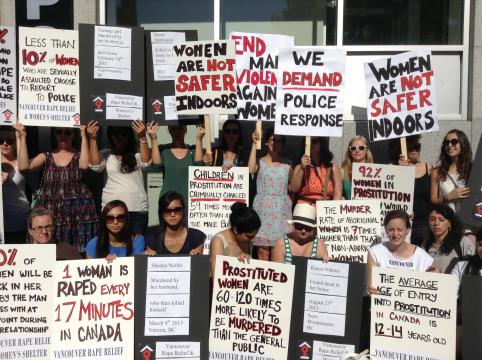
In the context of a racist and capitalist state system that women and especially Aboriginal women experience as oppressive, how can those who advocate for the abolition of prostitution use the government structure?
The Aboriginal women who have provided leadership to Canadian feminists were united in their bold demands to recognize prostitution as a form of ongoing colonial violence against Aboriginal women, who are overrepresented in street prostitution.
The Women’s Coalition for the Abolition of Prostitution will argue to the court to uphold the laws that forbid men from buying, selling and profiting from women bodies, and to strike down laws that criminalize women who are involved in the sex trade.
Together they argue an alternative both to the prostitution laws that criminalize the poorest and most disadvantaged women while rejecting the proposal to legitimate pimps, johns and bawdy house owners at the cost of women’s constitutional rights.
Women who called the rape crisis line also needed a place to escape from the violent assaults committed by their abusive partners, husbands and fathers. Our collective created the House Funding Committee (now known as The Friends of Rape Relief) to raise funds for the down payment on a transition house.
WESC rejects the implementation of these legal counsels over whom we have no control, cannot instruct, and yet have been granted the authority to speak for us. As women, and women’s organizations, we must speak for ourselves, choose our own counsel and give instructions, in the same way as the police and Crown.
Community support was essential from the beginning and there are a variety of supportive communities. By the fall of 1981, a down payment had been raised and placed on a house in East Vancouver, through a series of fundraising activities, including the Walk for Rape Relief, a pledge drive, bottle drives, dances, and women contributing a portion of their own salaries.